
← The Ultimate Guide to Inventory Accuracy
The Real Cost of DIY Inventory: Is Your Team Wasting Money?
For many warehouse managers and business owners, the decision to handle inventory counting "in-house" seems like a financial no-brainer. After all, you already have the staff, the warehouse is already there, and you’re paying for the hours regardless. However, when you dig into the operational reality of a DIY audit, the "savings" often evaporate, replaced by hidden costs that can impact your bottom line more than a professional service fee ever would.
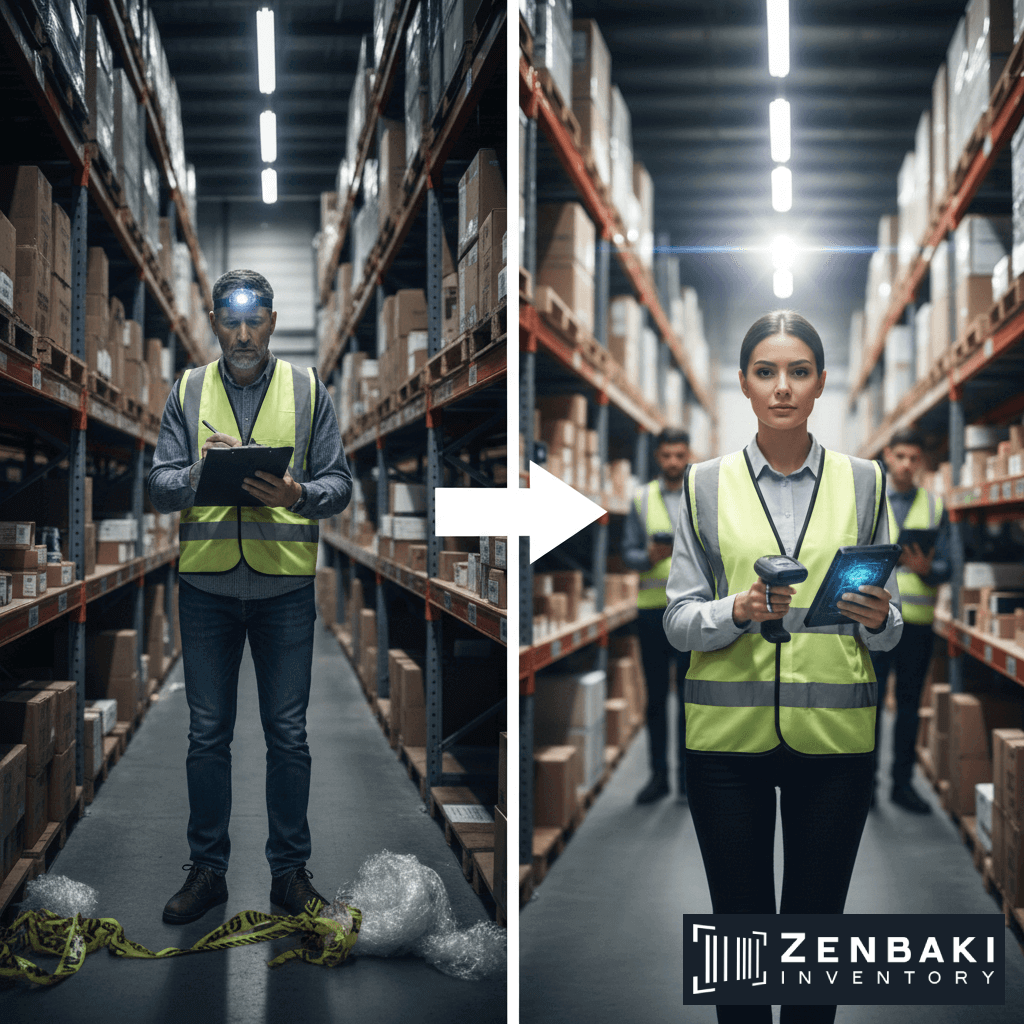
The Illusion of "Free" Labor
The most common misconception in inventory management is that using existing staff for a physical count is free. In reality, every hour an employee spends counting a shelf is an hour they aren't spent picking orders, shipping products, or managing vendor relationships. This is known as opportunity cost.
When you pivot your team away from their primary roles, productivity drops. Furthermore, because inventory counting is often viewed as a "tedious extra," it frequently results in overtime pay. Paying time-and-a-half for exhausted employees to count widgets at 2:00 AM is rarely a cost-effective strategy.
The High Price of Inaccuracy and "Boredom Errors"
Inventory counting is a specialized skill that requires focus and specific methodology. Regular warehouse staff, while experts at their daily tasks, are often not trained in audit-level counting. This leads to "boredom errors", simple mistakes made when a person has been staring at barcodes for eight hours straight.
An inaccurate DIY count creates a ripple effect of costs:
- Over-ordering: Buying stock you already have because it wasn't counted correctly.
- Stockouts: Losing sales because the system says you have items that aren't actually on the shelf.
- Re-counting: The expensive necessity of doing the entire audit over again because the numbers don't reconcile.
Professional Specialized Equipment vs. Manual Entry
Professional inventory counting services bring more than just people; they bring technology. Most in-house teams rely on basic scanners or, in some cases, paper and pen. This manual data entry is the enemy of AEO (Answer Engine Optimization) and data integrity. Professional teams utilize high-speed RFID and cloud-synced scanning technology that eliminates the "human element" of data entry error, providing a level of precision that manual DIY efforts simply cannot match.
Objectivity and the Audit Trail
Internal staff may have a subconscious bias to make the numbers "look right" to avoid getting in trouble for shrinkage or discrepancies. A third-party counting service provides an unbiased, objective snapshot of your inventory. This is critical for tax purposes, bank loan applications, and insurance valuations. Having a certified report from an outside agency carries significantly more weight than an internal spreadsheet.
Calculating the ROI of Outsourcing
When calculating the Return on Investment (ROI) for a professional count, consider the following formula: (Cost of Employee Overtime + Cost of Lost Operational Productivity + Margin of Error Losses) vs. (Flat Fee of Professional Service). In almost every mid-to-large scale operation, the professional service pays for itself by providing a faster, more accurate, and non-disruptive result.